- Blog
- Compensation & Passenger Rights
- Airlines rejected 58% of valid flight compensation claims in 2025. Here’s why, and how we fight back
Airlines rejected 58% of valid flight compensation claims in 2025. Here’s why, and how we fight back


In 2025, airlines rejected 58% of valid compensation claims the first time passengers submitted them. That's up from 52% in 2024. Airlines now turn down more claims they owe than claims they pay.
We know, because we see it every day. AirHelp analyzed thousands of eligible claims from 2025 and recorded every reason airlines gave for saying no. Most of those reasons don't hold up. Overturning them is what we do, and it's how we've gotten more than 3.4 million passengers paid.
Here's what airlines are doing, why it doesn't hold up, and what you can do about it.
What is a wrongful claim rejection?
A wrongful claim rejection is when an airline refuses to pay compensation on a claim that is valid under the law. It usually happens in one of three ways: the airline ignores the claim, rejects it with no reason, or blames something outside its control without proof. In 2025, AirHelp's data shows airlines wrongfully rejected 58% of valid claims in their first response.
These figures are based on the airline's first response. A rejection isn't the end of a claim. AirHelp keeps working on every wrongfully rejected claim, and many are paid once we come back with evidence.
Our 2025 analysis covers claims under EU and UK rules, and under passenger rights rules in Brazil, Turkey, Saudi Arabia and other countries, including the Montreal Convention.
How many valid compensation claims do airlines reject?
Airlines rejected 58% of valid flight compensation claims the first time in 2025, according to AirHelp's analysis of eligible claims. That's up from 52% in 2024, so airlines now reject more valid claims than they accept. The fastest-growing problem is silence: 41% of rejected claims were ignored or turned down with no reason, up from 34%.

Airlines wrongfully rejected 58% of valid claims in their initial response in 2025, up from 52% in 2024.
Rejection reason breakdown | 2024 | 2025 |
|---|---|---|
Ignored by the airline | 26% | 31% |
Weather | 21% | 25% |
Air traffic control | 9% | 11% |
No reason given | 8% | 10% |
Terms and conditions | 2% | 3% |
Technical problems | 4% | 3% |
Problems at the airport | 2% | 3% |
Previous flight | 3% | 2% |
Delay not long enough | 3% | 2% |
Other reasons | – | 10% |
Three things stand out:
Airlines are saying no more often. The gap between rejected and accepted claims grew from 4 points to 16.
Silence is growing fastest. Claims ignored or rejected with no explanation rose from 34% to 41% of rejections.
Weather and air traffic control are blamed more than ever. Together they were behind 36% of rejections, up from 30%. Those are the two excuses a passenger can't easily check alone.
Why do airlines reject valid compensation claims?
Airlines gave 10 main reasons for rejecting valid claims in 2025. Here they are, from most to least common, with how each has changed since 2024.
1. The airline ignored the claim (31%)
Up from 26% in 2024.
Almost a third of wrongfully rejected claims got no answer at all. No "no", no "we'll get back to you". Just silence. It's the most common way airlines avoid paying, and it works because many passengers give up. Silence isn't a rejection, and it doesn't cancel what you're owed.
2. The airline blamed the weather for your flight delay (25%)
Up from 21% in 2024.
Bad weather doesn't automatically rule out flight delay compensation. The airline says thunderstorms, ice or strong winds caused the disruption. But often there's no proof of bad weather on the route at all. Severe weather can be a valid reason, but only if it actually caused your disruption. We check historical weather data and whether other flights were operating normally. See what counts as extraordinary circumstances.
3. The airline blamed air traffic control (11%)
Up from 9% in 2024.
Airlines often say air traffic control restrictions delayed or canceled the flight, with no evidence they did. We check what air traffic control data shows. Sometimes the flight had clearance to leave on time.
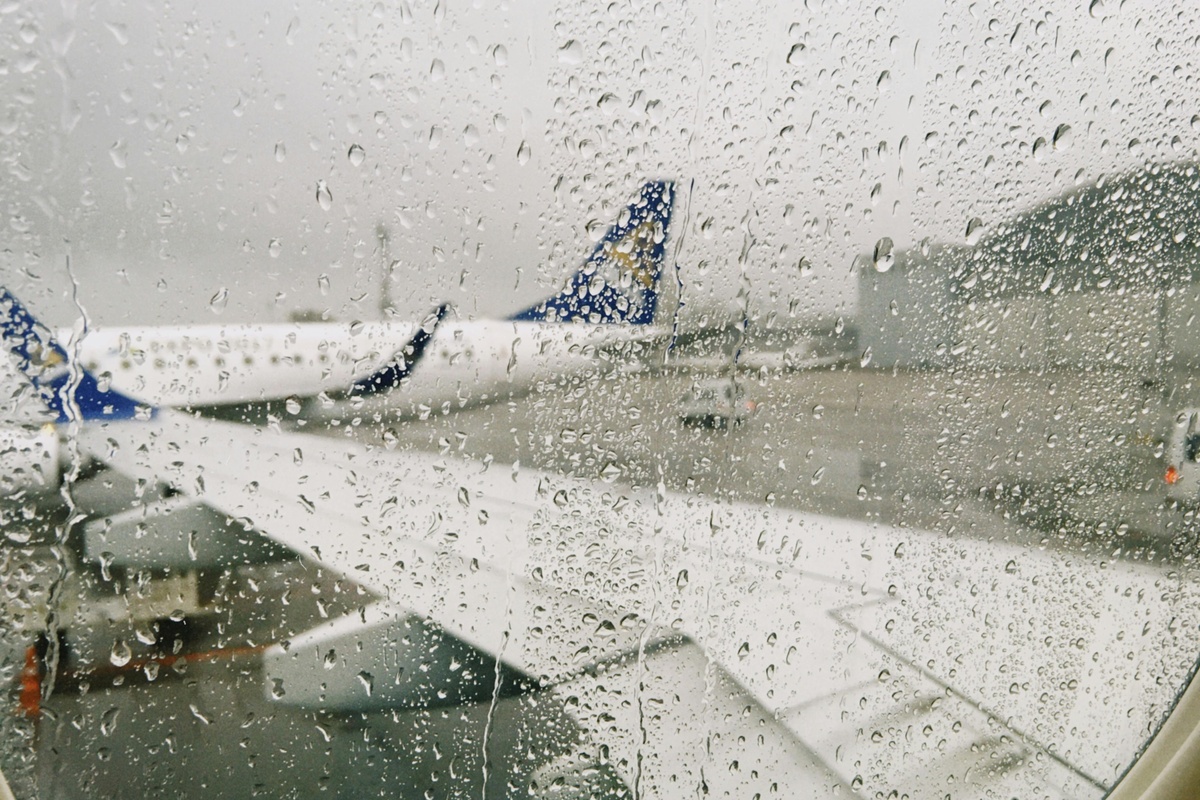
Image by Aibek Skakov from Pexels
4. The airline gave no reason at all (10%)
Up from 8% in 2024.
The airline replies, but the rejection doesn't say why. You can't argue with an explanation you never got, and that's the point. A rejection without a reason is a reason to push back.
5. The airline cited its terms and conditions (3%)
Up from 2% in 2024.
Airlines can't use their own T&Cs to cancel your rights. The law decides whether you're owed compensation, and no amount of fine print can override it.
6. The airline blamed a technical problem (3%)
Down from 4% in 2024.
Most technical problems come from preventable faults, or from an airline's decision not to fix them quickly. Under almost all air passenger rules, that's not a valid reason to refuse compensation. The rare exceptions include hidden manufacturing defects.

7. The airline blamed problems at the airport (3%)
In 2024, a similar category ("operational problems") was 2%.
The airline says an operational issue at the airport was outside its control. But often there's no evidence of a problem at the airport, and other flights left on time.
8. The airline blamed a previous flight (2%)
Down from 3% in 2024.
The airline says your delay was a knock-on effect of an earlier flight. But either there's no evidence for it, or the airline had time to make up the delay or bring in a standby crew and didn't.
9. The airline said the delay wasn't long enough (2%)
Down from 3% in 2024.
The airline claims your flight wasn't delayed long enough to qualify: 3 hours or more under EU and UK rules, or 4 hours in Brazil. Flight data often says otherwise. Here's what you can claim after a delay of 3 hours or more.
10. Other reasons (10%)
Airlines give many other reasons, from strikes to security threats. Some of these can be valid. But the airline still has to prove they applied to your flight, and often it doesn't.
How long do airlines have to respond to a compensation claim?
Under today's EU 261 rules, there's no fixed deadline for an airline to reply to a compensation claim. Most enforcement bodies and dispute schemes expect you to give the airline six to eight weeks before they'll step in. In 2025, 31% of rejected claims were never answered at all. From 23 October 2027, new EU rules require airlines to send you claim instructions within 96 hours of your journey, and to pay or explain a refusal within 30 days of your claim.
Waiting is exactly what airlines count on. With AirHelp, you don't wait alone. We track your claim's deadline, follow up with the airline, and escalate when it goes quiet.
Is there a time limit for flight delay compensation claims?
Yes, and it keeps running while the airline ignores you. Today, the time limit for a flight delay compensation claim is set by the country where the claim is filed, and it's counted from your flight, not from when the airline gets back to you.
EU: usually up to 3 years, but it varies by country, from 2 years in Slovakia to 10 years in Latvia.
UK: 6 years in England, Wales and Northern Ireland, and 5 years in Scotland.
Brazil: 5 years for domestic flights and 2 years for international flights.
Turkey: 2 years.
Montreal Convention claims: 2 years.
The EU deadline is about to get much shorter. From 23 October 2027, new EU rules give you just 9 months from your flight's departure to submit a compensation claim to the airline. That's far less than most countries allow today. UK rules aren't affected by the change.
If an airline sits on your claim for months, that's time you don't get back, and from 2027 there will be a lot less of it. AirHelp works out which country gives your claim the best chance, files on time, and keeps it moving. See the full list of time limits by country.
What should you do if an airline refuses to pay compensation?
If an airline refuses to pay, a rejection doesn't mean your claim was wrong. On your own, you can reply with evidence, complain to a national enforcement body, use a dispute resolution scheme, or go to court. Those bodies won't claim for you, though. AirHelp takes the claim on, checks the airline's reason against real flight data, and goes to court if needed. You pay nothing unless you get paid.
Going it alone means building the case, writing every follow-up, and carrying the risk of court yourself. You'd also be taking the airline's word on what caused your disruption. Here's why claiming with AirHelp beats claiming direct with the airline.
Can you take an airline to small claims court?
Yes. Within the EU, the European Small Claims Procedure covers cross-border claims well above the amount of flight compensation, and the UK has its own small claims process. But you'll pay the court fees upfront, prepare the evidence yourself, and may have to file in another country. If the airline still doesn't pay after a ruling, enforcing it is up to you too. With AirHelp, our legal network takes the airline to court for you, at our risk.
Do the new EU passenger rights rules change this?
Not yet. The EU has adopted its first major update to passenger rights in more than 20 years. It was published in October 2026, but most of the new rules won't apply until 23 October 2027. Until then, today's rules apply to every claim.
When the new rules do apply, the core protections stay. You'll still be entitled to compensation for delays of 3 hours or more, and airlines will have to tell you how to claim soon after a disruption. But you'll only have 9 months from your flight to submit your claim, so acting fast will matter more than ever.
The new rules also include an official list of extraordinary circumstances, including severe weather and some air traffic control restrictions. That doesn't give airlines a free pass. The airline still has to show the circumstance actually affected your flight, and that's exactly what we check. Here's what the EC 261 reform means for you.
How does AirHelp overturn wrongful rejections?
AirHelp overturns wrongful rejections by checking the airline's reason against that day's flight, weather, and air traffic control data, then challenging it with evidence. If the airline still won't pay, our legal network takes it to court, at our risk. It's how we've gotten more than 3.4 million passengers paid.
We've been fighting wrongful rejections since 2013. We know which excuses airlines use, and we know how to prove when they don't hold up. There's nothing to pay upfront: our fee is only charged if you get paid. See our fees page for details, or read answers to common questions about AirHelp.